I Was Scared I'd Be Old and Poor at 50. Here's the Map I Built Instead.

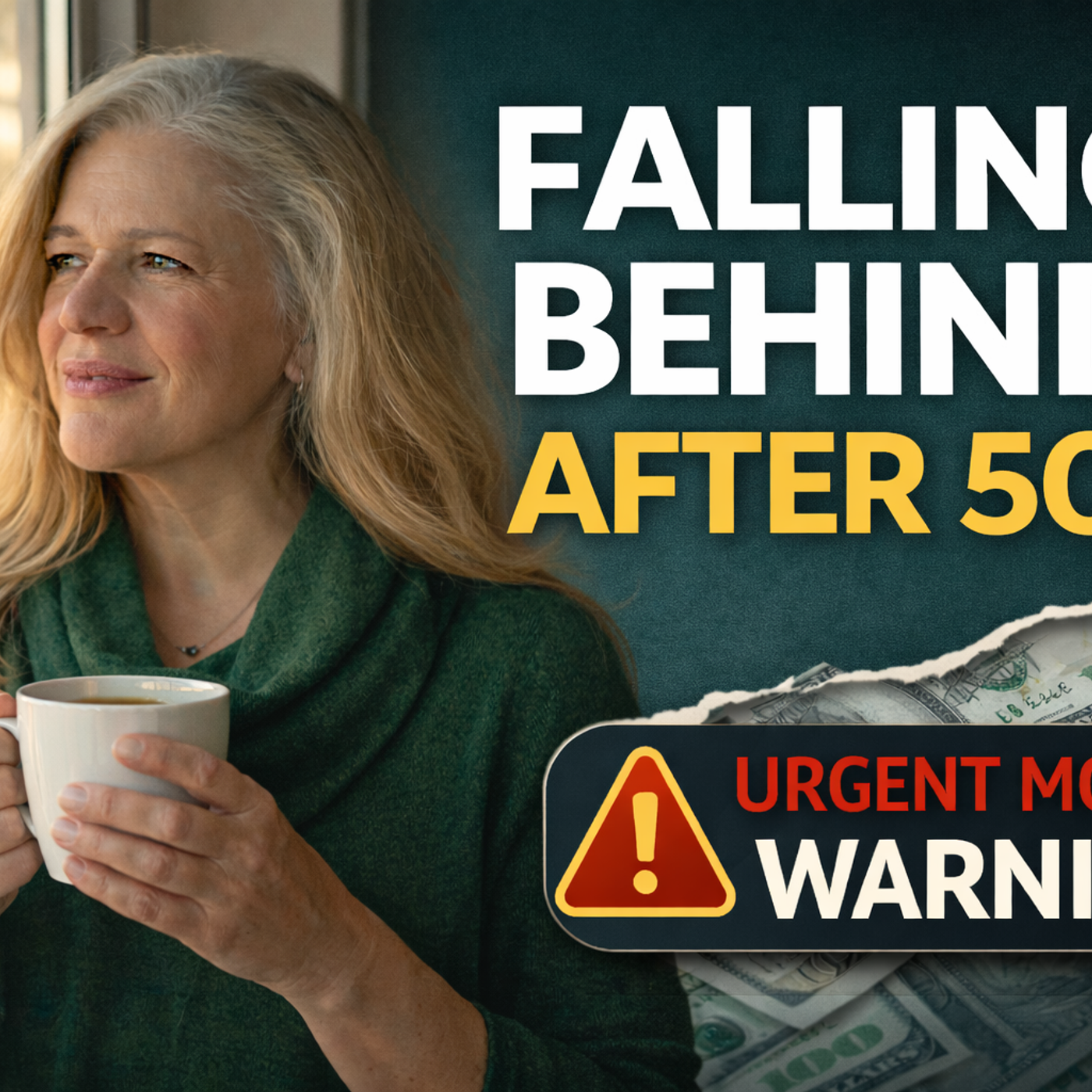




I Was Scared I'd Be Old and Poor at 50. Here's the Map I Built Instead. If you're waking up at 3am about money, this is why. Subscribe Now! Let's move forward together and keep your money in your pants.
I spent years waking up in the middle of the night thinking about what I owed, carrying an anxiety I had stopped noticing. This episode is the four-stage map I wish someone had handed me — built for women over 50 who are done waiting and ready to move. I walk through the retirement catch-up contributions most women over 50 don't know exist, the compound interest math that works even when you start small, and why getting honest about your numbers is the one move that changes everything else. Stay through Stage Three — that's where the IRS catch-up numbers will stop you cold.
🌐 Website: https://moneyandmotionpodcast.com
Chapters:
- 00:00 Introduction
- 01:04 The Map
- 03:25 Stage One
- 04:35 Stage Two
- 06:08 Stage Three
- 08:36 Stage Four
The content on this channel is created for informational and entertainment purposes only and reflects Josefina's personal opinions based on her life experience and independent research. Josefina is not a licensed attorney, CPA, insurance agent, or financial advisor. Nothing on this channel should be considered tax, legal, insurance, safety, or financial advice. When specific stocks or companies are mentioned, Josefina may hold a personal ownership interest. This channel may include affiliate links. Any offers, rates, or figures discussed are subject to change, so always verify current terms directly with the source. Some offers mentioned in older videos may no longer be available. Do not make buying or selling decisions based solely on this content. For guidance specific to your situation, consult a qualified professional. Always do your own due diligence. Thank you for being part of the Money and Motion community.
#WomenOver50 #JosefinaBonillaVelez #RetirementPlanning #FinancialFreedom #CatchUpContributions #WomenAndMoney #PersonalFinance #FinancialPlanning
Josefina Bonilla Velez: We are over 50. And in terms of money, what worked for us in our 30s doesn't work now. But here's the good news. It's not too late. We, my friends, have an estimated 20 to 30 more years ahead of us. And that's not me being optimistic, which I am. That is the CDC. I'm not saying you need to work the rest of your life. I'm just saying that we have time. More than we think, there was a moment that scared me when I thought, â my goodness, I cannot be old and poor. That would be too much. I'm kidding, kind of. But that moment happened and what came out of it was this. realized I needed to take 100 % ownership of my finances. â more waiting. So I say to you, Let's do it now, let's do it together. And what I want to give you today is not a list of things you should have done at 35, just a map with four stages. We don't need to talk about what got us here. Let's focus on where we want to go. A good friend once told me when I was in a big financial mess, this is just moment in time. It does not have to define your next. That kept me going when I could not see the light at the end of the tunnel. And yet that light came. Whatever that story is for you, you found your way here. And now we need to find what's next. You know, I like a little research. So here it is. A 2023 fidelity study found that 48 % of women say that they have never taken the lead on their own long-term financial plan. We are not too late, girl, we look good and we have good amount of years left to make it great. So here's my map. I once heard someone say the war cry of defeat is I already know that. Don't use that as your shield not to start today. day that you don't get started is the day you are holding yourself back. I used to wake up in the middle of the night just thinking about my bills, what I â It was exhausting. And the longer you wait, the more you're leaving on the table. Every month, you don't have a clear picture of your money. You're making decisions without information. You are leaving things on the table you don't even know exist. You're paying interest you could be eliminating. You're not contributing to retirement accounts at the level you could be. And underneath all of that is a low hum of anxiety that follows you around. this weight you carry and have carried for so long, you forgot it wasn't supposed to be there. The weight of not knowing. The Federal Reserve's 2023 report on the economic well-being of the U.S. household found that 37 % of adults say they would handle a $400 emergency borrowing or putting it on a credit card. $400. So talk about the map Stage one is the reckoning. First things first. Get a nice glass of vino and let's start. What do you owe? Car payment, rent or mortgage? Break it down. My mortgage is $2,100. My car payment is $350. Insurance, about $90 and so on. Don't forget to list your entertainment. Netflix, Prime, Apple. Nobody is watching you here. Be honest. Count every account and every day. Next, how much money are you bringing in each month? Let's start with what you net. your paycheck actually looks like. Any money from side hustles? Any money from the weight you lost? I your ex-husband. Kidding. Count it You will revisit this often. It's like getting a GPS for your money. You can do this on a piece of paper. Though if you're anything like me, that would not be a good idea. I keep journals and candidly, I don't ever worry that someone will read them because I can barely read them myself. Send me a note and I will send you the document I use. Now you are in the know. Stage two is foundation. This is where you stop bleeding. Okay, maybe not bleeding because that stopped years ago. Yes, I am normally this funny, or at least I think I am. So now we know the number. Two things happen next. You build a cushion, even a small one, and you get honest about what â is actually coming and going out every month. Let's start with a round number, â $1,000. This is your goal. Not months of expenses, not some perfect emergency fund. Let's just start $1,000 in a separate account you do not touch. You set up automatic transfers every week, let's say $25 or $50, into a high-yield savings account. Personally, I have a savings account with Fidelity. Love them. That is close to $100 to $200 a month, and you leave it alone. Before you know it, that turns into that $1,000. Here is why it works, even when it feels too small. Every dollar you put in that savings account makes a little money just by sitting there. And then that little money makes a little bit more money. Girl, that is compound interest. You are not doing anything extra here. Your money is doing the work. Put in $75 a week. And by the end of the year, you have close to $4,000 plus what it earned just sitting there. That my friend is the foundation we're going to use. â the build. Did you know â IRS allows women over 50 and to contribute an additional 8,000 a year to a 401k on top of the regular limit? And if you're between 60 and 63, that number jumps to 11,250. They call it a catch up contribution. I call it a gift. I didn't know I had. Most women eligible for this don't use it. Not because they can't, because they don't know it exists. Now you know, let's use it. Here is how the match works. So if you have a 401k at work, there's almost certainly free money sitting there waiting for you. The most common setup, according to Fidelity, is dollar for dollar on the first 3 % you contribute and then 50 cents the dollar for the next 2%. So if you put in 5 % your company adds another 4%. If you're making $60,000 a year and you contribute 5 % you're putting in $3,000. Your company adds $2,400. You just made $2,400 for doing something we should have been doing anyways. Now let's talk about what Increasing your contribution actually does your paycheck if you make 60,000 like we talked about a year and you increase your contribution by 5 % that is a $250 that is $250 a month, but because your contributions come out pre-tax Your take-home pay actually only drops around a hundred and eighty seven dollars a month depending on your tax bracket You feel $187 less. Your retirement account, however, gets $250 more. And your company may be adding another $200 on top of that. That is over $5,000 a year going into your future for $187 a month. Yes, I know it's a little bit of a sacrifice and it is part of our strategy forward. Log into your retirement account this week. Just note your number, then increase it by 1%. Just one. You will not feel it in your paycheck. You will feel it later in a way that really will have a huge impact in your life. four is the shift. This one is my favorite. You stop managing money from fear and start making decisions a place of knowing because you know. â You stop avoiding the accounts. check them the way you your email regularly without dread. I'm genuinely excited for you. The moment I stopped treating my finances, as something happening to me and started treating them as something I was in charge of, changed. Not the numbers first, me first, and then the numbers follow. Start today. Remember, you have more time than you think. You have more options than you know, â you have everything you need to start today. The map exists, and you are on it. I'm Josefina Bonilla-Velez and this is Money and Motion. We can't go back, but we can move forward together. Subscribe now wherever you listen to podcasts.



